
Who Azure AI Foundry (Microsoft Foundry) Is For and Why
By SolutionJet Architecture Team
🚀 The AI Agent Factory: Why Azure AI Foundry is Non-Negotiable for the Enterprise
If you wanted a full enterprise AI operation leveraging all Azure Platform as a Service then Azure AI Foundry renamed as Microsoft Foundry now would give you that. For frontier AI (highly capable AI model that can perform various AI tasks), forget generic GPU clusters. Microsoft Foundry is not just an infrastructure platform; it is a specialized, integrated factory for creating AI Agents that operate within the highly regulated and complex reality of large businesses.
🤷So, Who Azure AI Foundry is For and Why?
Primarily for the Enterprise AI Development Team building mission-critical, multi-agent systems that must execute tasks across a fragmented, proprietary business application landscape.
🙋Why?
Because it allows to build business applications that only possible today on their platform that can act as a Zero-Trust, Multi-Agent, System-of-Record Orchestrator. Here is a scenario to consider:
Scenario: The Regulated Financial Agent System
Imagine a global investment bank needs an AI system to automate complex due diligence (DD) for a new acquisition. This DD process requires multiple steps:
- Legal Agent: Must access confidential contracts in SharePoint (Microsoft 365).
- Financial Agent: Must query structured balance sheet data in a proprietary SAP system.
- Compliance Agent: Must verify all transactions against regulatory databases and log access via the corporate identity system.
- Reporting Agent: Must summarize findings in a final Word document and notify stakeholders via Teams.
| Agent | Task & Data Source | Unique Foundry Enabler | Competitor Gap |
|---|---|---|---|
| Legal | Read highly sensitive contracts (SharePoint / M365) | Microsoft Entra Agent ID The agent gets a first-party identity anchored in Azure AD | Competitors require complex, custom federation with higher friction and weaker identity trust |
| Financial | Query proprietary SAP data and summarize with tailored formatting | Unified Azure AI Agent Service + Logic Apps / Power Automate Streamlined workflows and secure SAP connectors | Competitors often require manually managed external pipelines or custom API layers |
| Compliance | Log all access and verify findings against PII and PCI datasets | Foundry Control Plane + Microsoft Purview Built-in data governance, lineage, and compliance enforcement | Competitors rely on third-party MLOps tools and lack unified governance |
High Level Enterprise Integration
The diagram below illustrates how Foundry abstracts away the complexity of securing and connecting these agents to the core Microsoft enterprise ecosystem, which is the key differentiator for complex business applications.
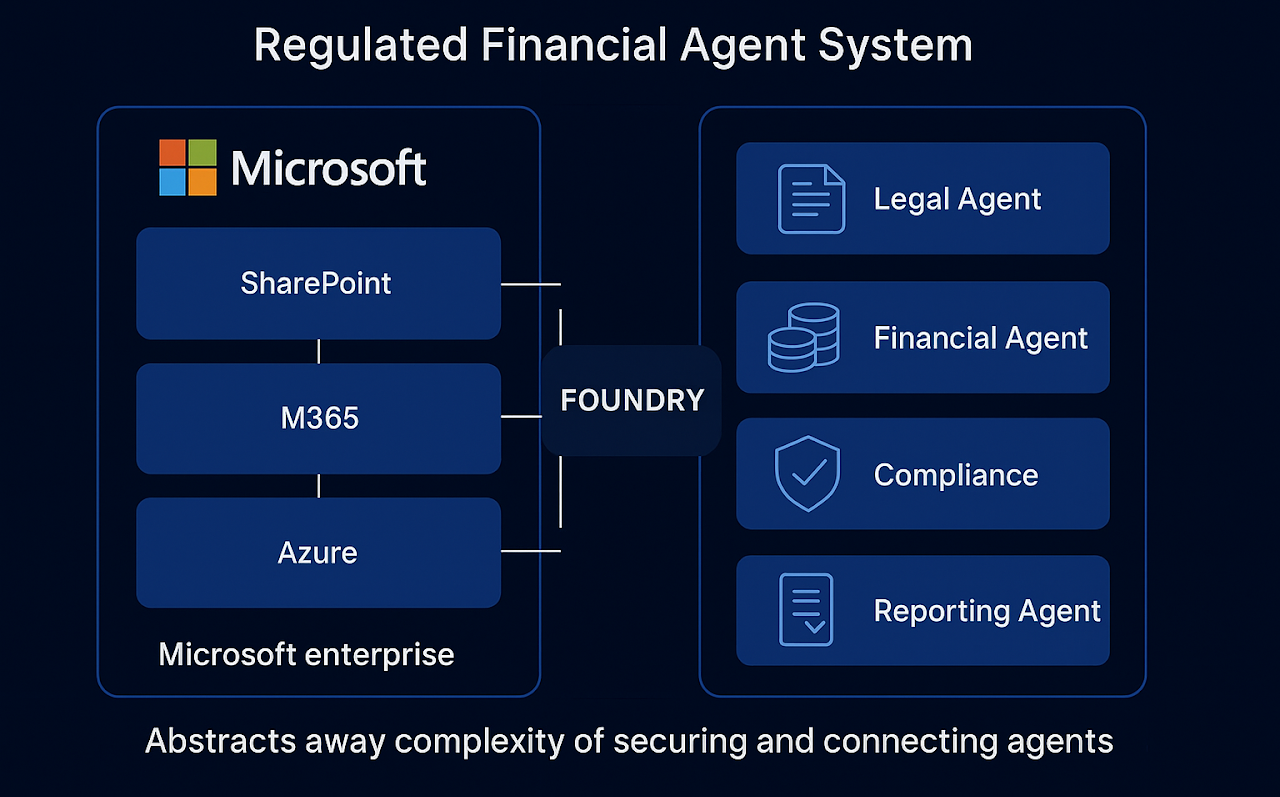
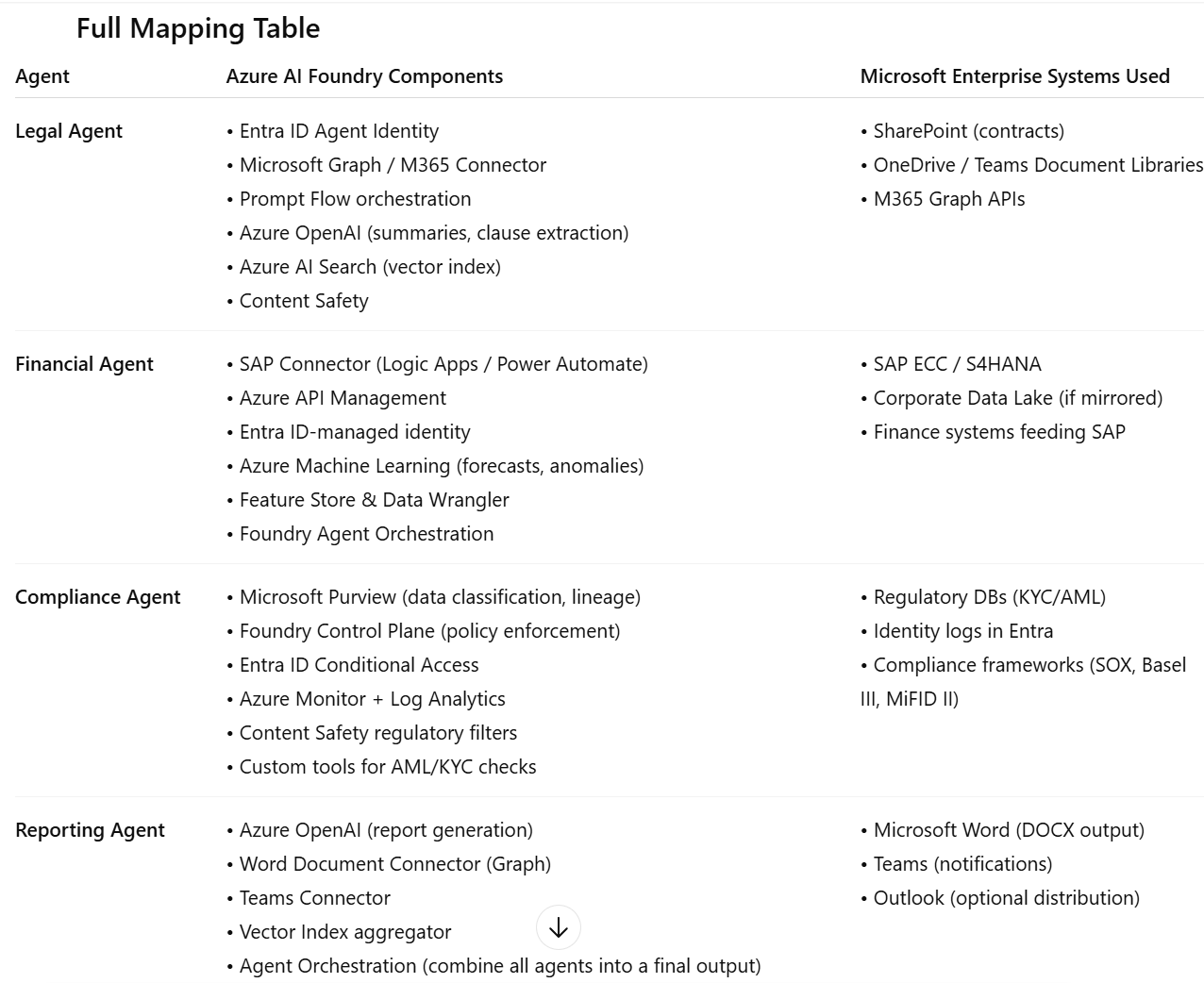
Now lets take a deeper look what Microsoft Foundry components could be used under the hood to automate and integrate with Microsoft Services for each of these agents
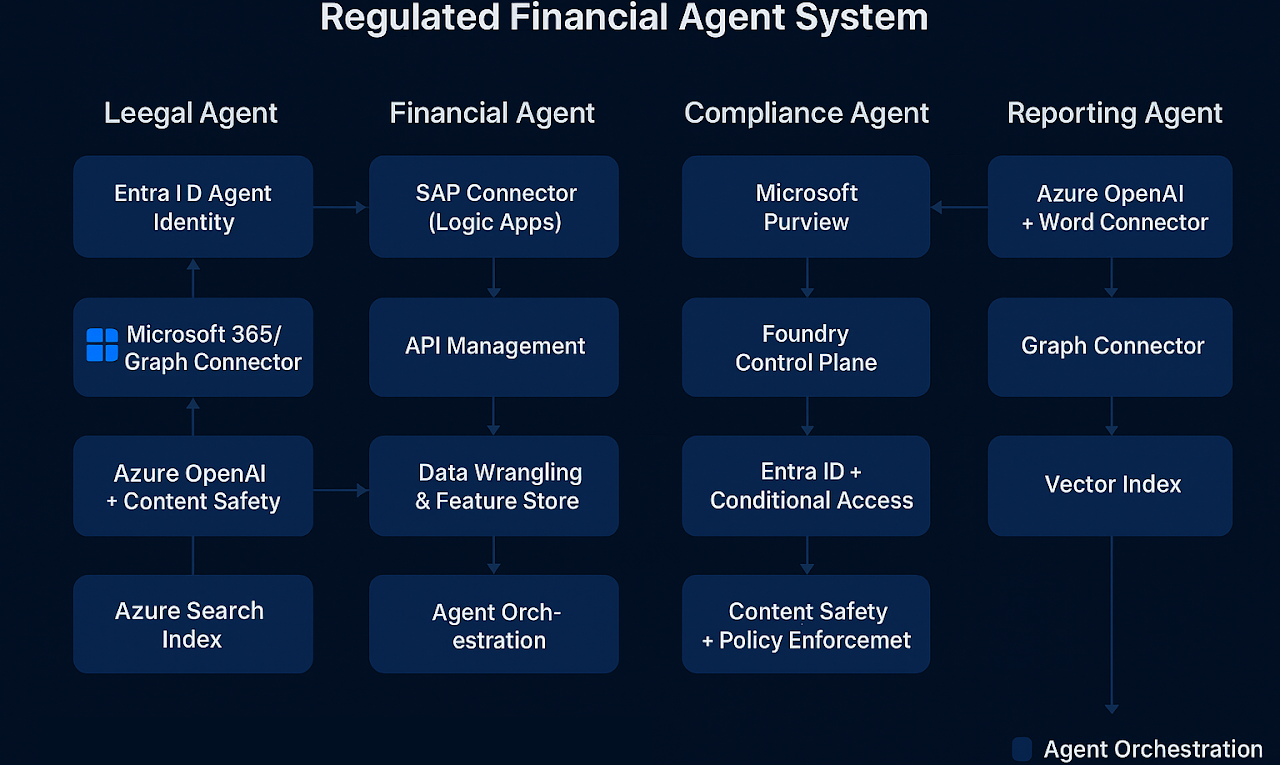
- A detail mapping flow from Agent → Azure Foundry component → Enterprise system
This is why Microsoft Azure AI Foundry is the only enterprise-ready solution because it uniquely unifies identity, security, data connectivity, and model orchestration under a single governed platform—allowing companies to build secure, compliant, multi-agent AI applications directly on top of the systems they already trust.
Happy Agentic AI Building!🥳
More in this series
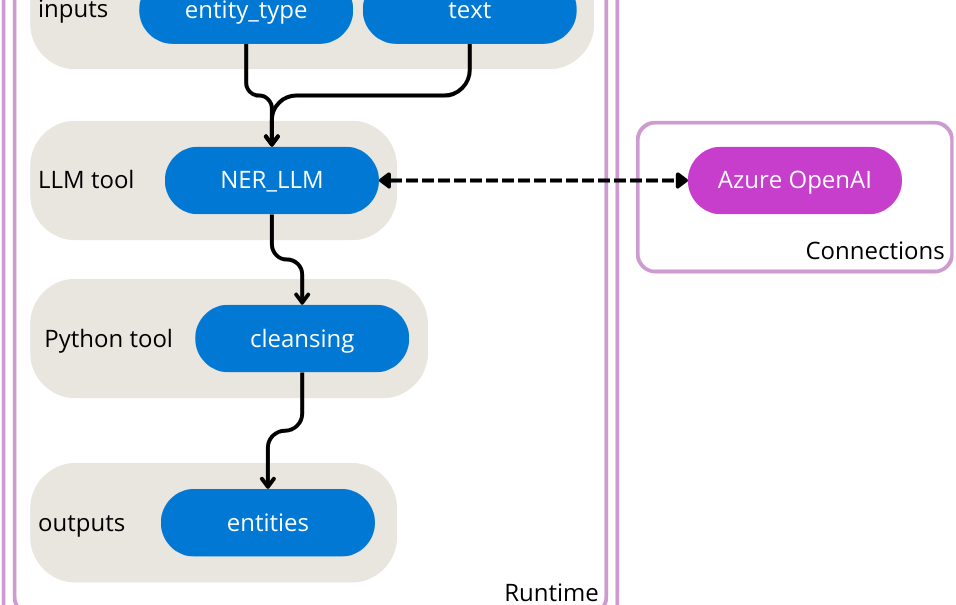
Stop Herding Cats: How Azure Prompt Flow Makes Your AI Agents Play Nice
An order-processing AI agent built with Azure Prompt Flow: the LLM decides which tool to call, Prompt Flow executes it securely against the inventory system.
Read Full Article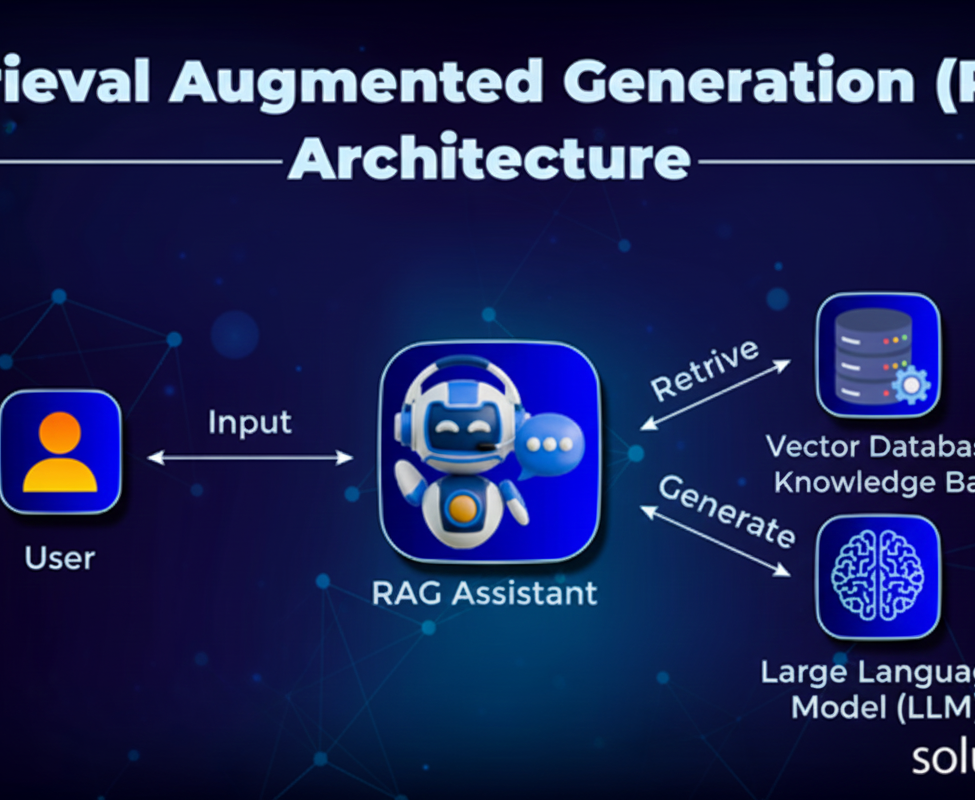
How to Implement RAG Architecture for Secure Business Apps on Azure AI
Build an "AI Knowledge Navigator" with Retrieval-Augmented Generation on Azure AI Search and Azure OpenAI, grounded in your private documents.
Read Full Article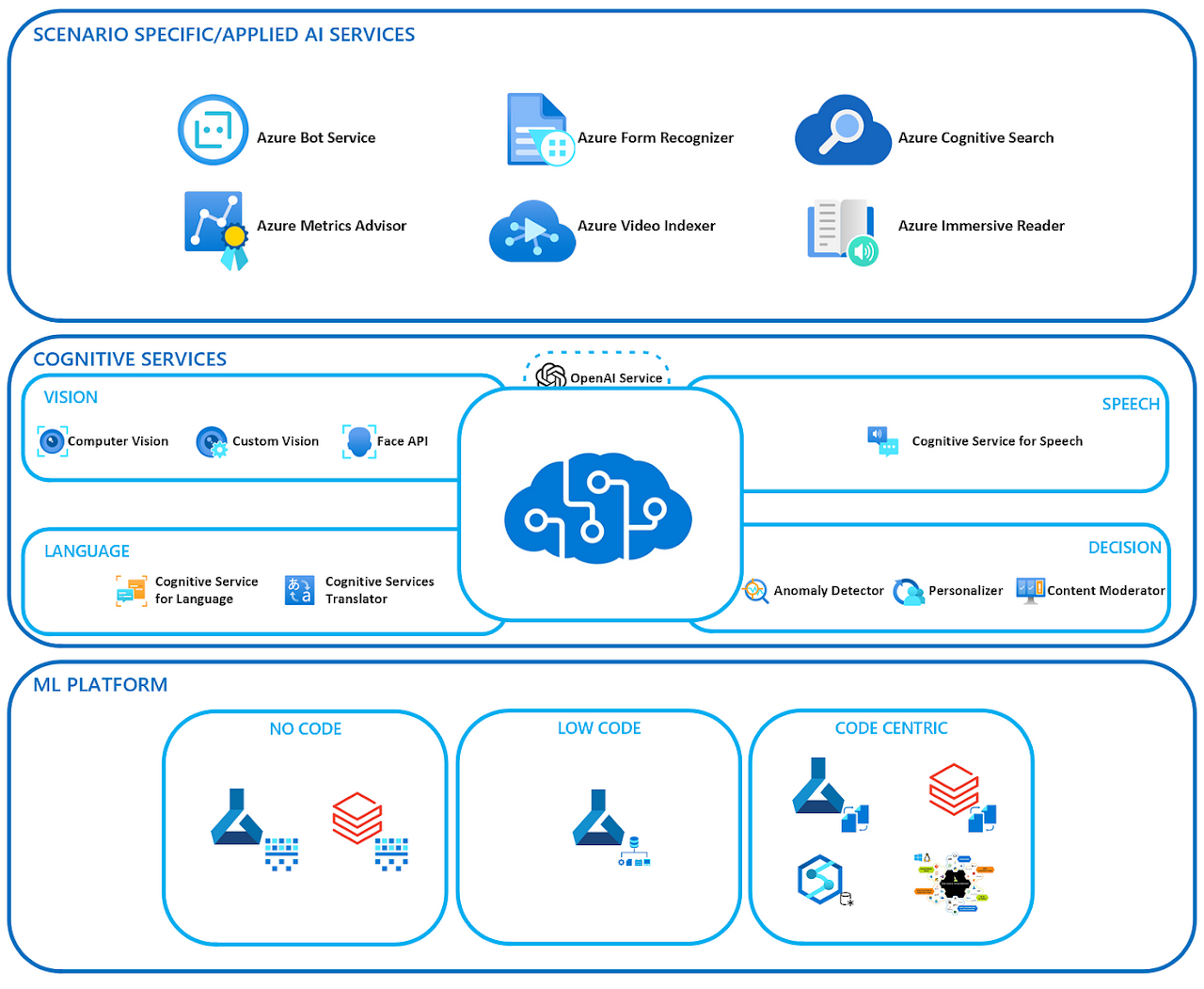
Unleashing the Potential of AzureAI Services for Our Clients
How Azure AI services (machine learning, language, vision, speech and personalization) make client systems smarter, with case studies from finance and e-commerce.
Read Full Article